Price range: $11.99 through $17.95

ISBN: N/A
Catalog: Black Lawrence Press
Request a Review/Exam Copy

Complete only if requesting a physical review/exam copy. While we can only send physical copies to addresses within the US, reviewers and educators outside the US are welcome to request an e-galley (PDF). (See check boxes below.)

Check as many boxes as apply.

While filling out this form is not a guarantee you will receive a review/exam copy, we are happy to consider your request. E-galleys are typically available about 1-2 months prior to a book’s publication date, and physical review/exam copies are available shortly before publication.

The Apricot Tree

Pauline Kaldas

Publication Date: January 26, 2027

Description

Black Lawrence Press Immigrant Writing Series Selection

The Apricot Tree welcomes us into a world of linked stories surrounding a group of immigrants from different countries who find themselves in the same Arab neighborhood of Bay Ridge. At the center is Busyana, who arrives from Egypt at an older age and settles into a new life in her Brooklyn, NY community. Busyana’s encounters with her new neighbors lead to personal transformations as each person whose life she has touched continues on their journey.

One by one, each immigrant tells their own story: Adnan, a Palestinian server at the local bakery who has recently arrived from Gaza; Dina, Busyana’s niece who struggles with her sense of identity; Masud, Busyana’ s brother who remains in an unhappy marriage; Dominykas, a Lithuanian man who lost his wife; and Anhur, a young Chinese girl who searches for a sense of belonging. Through her compelling storytelling, Pauline Kaldas invites us to live with these characters as they carry the weight of their lost homes and attempt to make a new life.
Praise

Pauline Kaldas is a keen observer of the immigrant condition, illuminating the lives of people who share the experience of changing countries and being changed by them.

–Laila Lalami, author of The Dream Hotel

Though a collection of short stories, The Apricot Tree reads like a novel in the way it explores deeply and thoroughly both individual human consciousness and the subjective experiences of everyday people’s everyday lives. The result is a deepening sense of what makes the characters in these linked stories more like us, despite the differences between their lived experiences and our own. A major accomplishment of the best fiction is when the lives of ordinary, diverse people become not only more intelligible to us, and we more empathetic to them, but when the mirror that the writing creates is clear, vivid, and reflective of what we may otherwise overlook. With this book, Kaldas accomplishes all these.

–Hayan Charara, author of Hush Little Children

In The Apricot Tree, Pauline Kaldas writes with clarity and quiet grace, illuminating the inner lives of those caught between worlds. These stories of interconnected characters capture the ache of displacement and the persistent search for belonging. Tender, precise, and profoundly human.

–Balli Kaur Jaswal, author of Erotic Stories for Punjabi Widows

From the author of The Measure of Distance, Looking Both Ways, and The Time Between Places comes The Apricot Tree, a poignant tale-in-stories whose remarkable map is both geographic and emotional, a collection that guides readers through the communal losses and joys of the American immigrant experience. The collection’s connective tissue is the path of an Egyptian immigrant named Busyana, whose point of view will immediately captivate readers. In the collection we hear from all the lives Busyana touches, from Adnan, a young Palestinian whose culinary and social exploration lands him in the kitchen of a Harlem restaurant, to Dominykas, the Lithuanian who shares late-life love with Busyana before the march of time splits them.

Each story in The Apricot Tree is a sacred marvel, not simply an instruction manual for creating community, but a guide for keeping the faith. When Anhe, a young girl from Shanghai, says, “you can live in China and America at the same time,” we understand that the cultural bridge is both something we create and something we contain; by the end of these seven compelling short stories, we understand that the adjustment of moving to another country is, in fact, an eternal cycle of welcome, of receiving even in giving. Truly, this collection is a gift, a powerful gift from one of the most essential voices in contemporary literature.

–Jacinda Townsend, author of Trigger Warning and Mother Country

About the Author

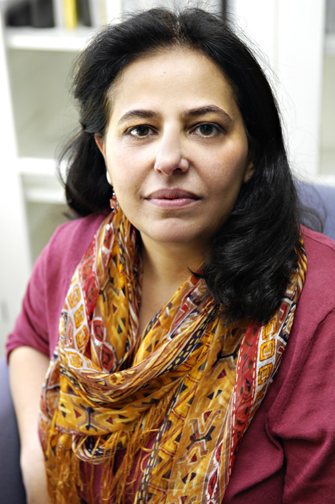
Pauline Kaldas

Pauline Kaldas immigrated from Egypt with her family at the age of eight. She returned to Egypt several times and lived there for three years while teaching at the American University in Cairo. She is the author of The Measure of Distance (novel), Looking Both Ways (essays), The Time Between Places (stories), Letters from Cairo (memoir), Egyptian Compass (poetry), and the textbook, Writing the Multicultural Experience. She also co-edited Dinarzad’s Children: An Anthology of Contemporary Arab American Fiction and Beyond Memory: An Anthology of Contemporary Arab American Creative Nonfiction. She was awarded a fellowship in fiction from the Virginia Commission of the Arts and has been in residency at MacDowell, the Virginia Center for the Arts, the Writers Colony at Dairy Hollow, South Porch, Green Olive Arts in Morocco, and 360XQMX in Mexico. She is currently Professor of English and Creative Writing at Hollins University.

Visit Author Page