Buy from Black Lawrence Press

$17.95

ISBN: 9781625572431
Catalog: Black Lawrence Press
Request a Review/Exam Copy

Complete only if requesting a physical review/exam copy. While we can only send physical copies to addresses within the US, reviewers and educators outside the US are welcome to request an e-galley (PDF). (See check boxes below.)

Check as many boxes as apply.

While filling out this form is not a guarantee you will receive a review/exam copy, we are happy to consider your request. E-galleys are typically available about 1-2 months prior to a book’s publication date, and physical review/exam copies are available shortly before publication.

Daughtersong Diaspore

Barbara Jane Reyes

Publication Date: May 25, 2027

Description

An Immigrant Writers on Immigrant Writing Series Selection

Daughtersong Diaspore by award winning poet Barbara Jane Reyes is a series of poems, epistolaries, lyric essays, unanswered questions, and explorations of kapwa and loób, Filipino virtue ethics. Critical and confessional, these are de-colonial offerings of an American daughter for her late Filipino mother, in which the daughter attempts to view her mother’s life with compassion and empathy. This is a work of perseverance, mother tongue, grieving, and grace. Daughtersong Diaspore asks what we inherit and what we must hold.

Praise

Following Letters to a Young Brown Girl, that fierce reckoning with the cost of being a brown girl in America, Barbara Jane Reyes turns now toward the mother and mother tongue, the origin that constitutes this new collection’s central wound. Daughtersong Diaspore thrums with holy things and the collisions of a diasporic life: agimat and rosary, ladybug and lullaby, sampaguita and swallowtail, bank accounts and credit card bills. Here, the speaker attends to the mother and her wings, her womanbody, her illness, and her disappearance into starlight, to the small violences of a patriarchal inheritance, and the jasmine-and-lullaby rituals that outlast them, in language that wields, cooks, mutates, bargains, and sings back. This is the secret notebook, the brown daughter with the many-tongued mouth, both holy thing and dangerous one.
—Aileen Cassinetto, author of An Immigrant’s Guide to Navigating Borders and Bodies of Water

With a luminous, sharp-edged, singular voice, Daughtersong Diaspore transcends languages, genres, and boundaries to weave elegy and ode with poetry and prose, examining the complexities and nuances of our relationships with our caretakers, our cultures, and ourselves.
—Randy Ribay, author of Everything We Never Had

Daughtersong Diaspore moves between poetry and prose, English and Tagalog, prayer and recipe, sautéed garlic and colonial accumulation, rewarding us with an exacting account of a mother-daughter relationship and the poet’s navigation across languages, words, and forms to write it. This is Barbara Jane Reyes as daughter, one who inherited silence and turned to poetry to answer it. With flowing descriptive language, questions and conjurings, her poems ask us to recognize the unequal demands diaspora places on mothers and daughters, while calling for resistance to the patriarchal structures that fracture people, families, and communities. Although the relationship is her own, we are never asked to understand only the poet. Instead, the private becomes an expansive yet disciplined exploration of the conditions we all inhabit, with no villains or victims—only the rigorous work of reckoning with an inheritance and giving it voice. The care, kapwa, and intellectual “badassery” that animate Daughtersong Diaspore reveal why Barbara Jane Reyes has become a literary matriarch for a generation of Filipino American writers: a poet mentor whose commitment to the art uplifts a community.
—Randy Gonzales, author of Settling St. Malo

If anyone has any doubt as to who Barbara Jane Reyes is, read this book. Daughtersong Diaspore is a wailing. It is a fierce feminist incantation toward the dignity of mother and the freedom of unmothering, toward the unfettered flapping of mother tongue.

I found myself at once cradled and rocked by this work. This is a poetics of rage, an elegy of aching, a mixtape of daughter-psalms, a lexicon of subversion. In Daughtersong Diaspore, Reyes has achieved a resurrection of motherlove in a realm apart from patriarchy, a realm that resists the expectation that a daughter should be one thing, that a mother should be all things, that a text should pledge allegiance to one genre.

Reyes deftly wields language as a weapon to make sense of loss. Blending English, Tagalog, Ilokano, and Spanish into a liminal tongue, she incants belief in her depleted and departed mother—a standard bearer for many of our own—to invoke a wholeness denied to her in life. “What if together we could unclip our hair, gather our skirts, throw off our shoes, and just run” Reyes writes, amidst her mother’s tomato pin cushion and slotted wooden spoon, the open womb and the open wounds. What is this magic, lovingly divined and witnessed, this accumulated kalat of a life? No less than the power of her mother’s potential, winged by Reyes’ balisong words.
—Jen Soriano, author of Nervous: Essays on Heritage and Healing and co-editor of Closer to Liberation

About the Author

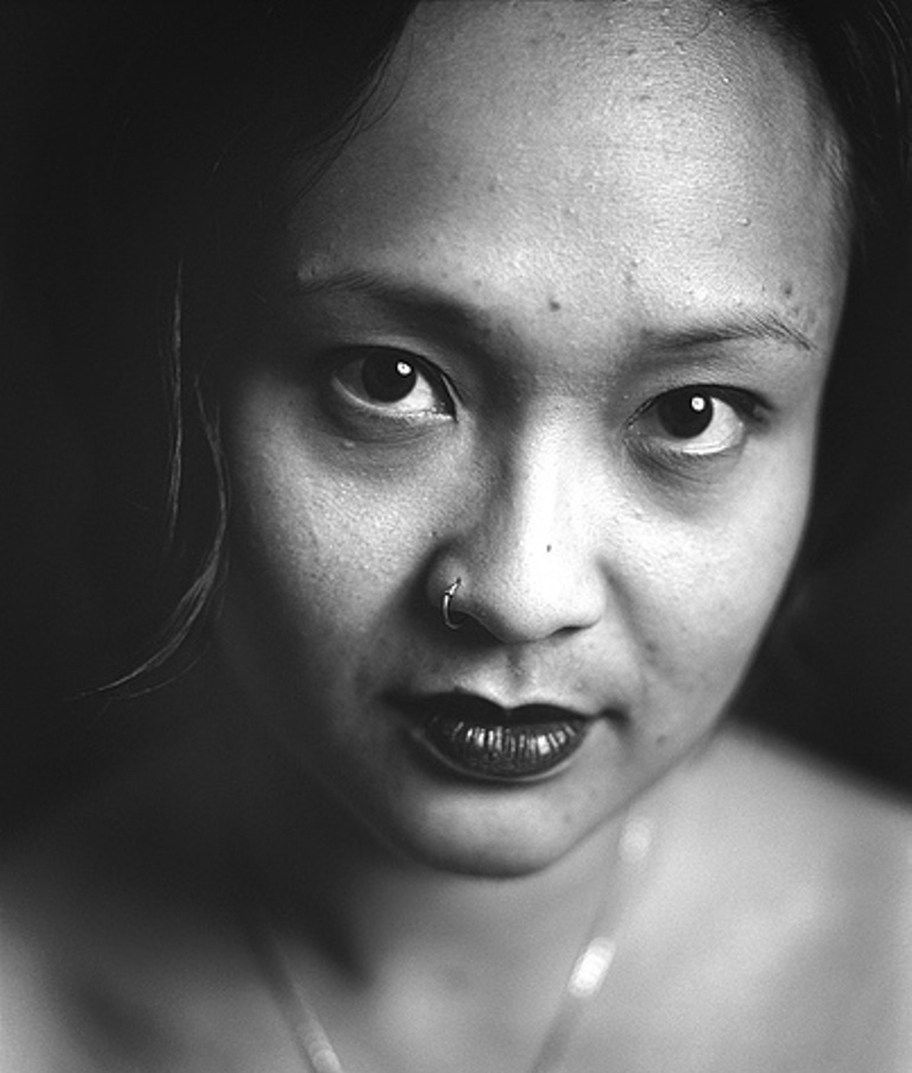
© Peter Dressel

Barbara Jane Reyes

Barbara Jane Reyes was born in Manila, Philippines, raised in the San Francisco Bay Area, and is the author of Gravities of Center (Arkipelago Books, 2003), Poeta en San Francisco (TinFish Press, 2005), Diwata (BOA Editions, Ltd., 2010), To Love as Aswang (Philippine American Writers and Artists, Inc., 2015), Invocation to Daughters (City Lights Publishing, 2017), Letters to a Young Brown Girl (BOA Editions, Ltd., 2020), and Wanna Peek Into My Notebook?: Notes on Pinay Liminality (Paloma Press, 2022). Daughtersong Diaspore is forthcoming in 2027. She is also the author of three chapbooks, For the City That Nearly Broke Me (Aztlan Libre Press, 2012), Cherry (Portable Press at Yo-Yo Labs, 2007), and Easter Sunday (Ypolita Press, 2007). Poems and essays have appeared in Asian American Literary Review, Asian Pacific American Journal, Chain, Hambone, Huizache, Maganda, Marías at Sampaguitas, Meridians, Ms. Magazine, New American Writing, New England Review, North American Review, Notre Dame Review, Poetry, Prairie Schooner, San Francisco Chronicle, Smithsonian Asian Pacific American Center, South Dakota Review, Southern Humanities Review, The New York Times, World Literature Today, and elsewhere. An Andrew W. Mellon Foundation Fellow, a recipient of the James Laughlin Award of the Academy of American Poets, the Global Filipino Literary Award, and a San Francisco Press Club Journalism Award, she received her BA in Ethnic Studies at UC Berkeley, her MFA at San Francisco State University, and she teaches in the Yuchengco Philippine Studies Program at University of San Francisco. She has taught in the MFA programs at Mills College and University of San Francisco. She lives with her husband, poet and educator Oscar Bermeo, in the East Bay.

Visit Author Page